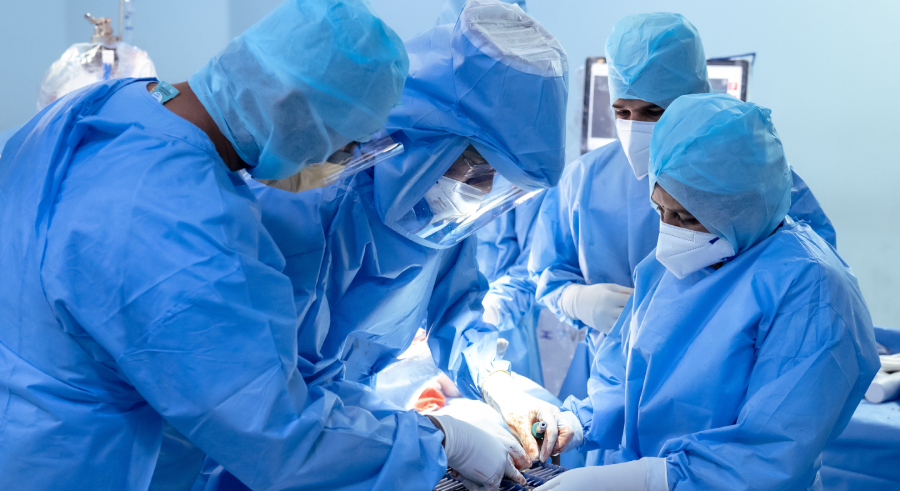
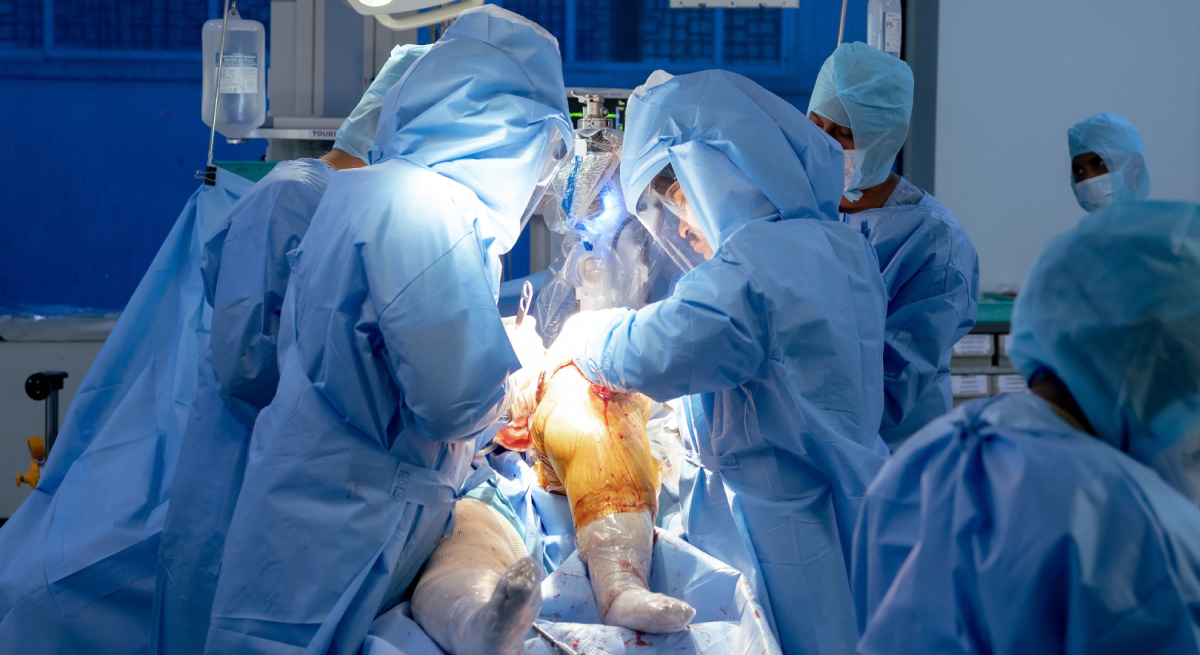
Severe knee deformity can make joint replacement more complex than a routine procedure. Advanced arthritis, previous injuries, or years of uneven joint wear may change bone shape, ligament tension, and leg alignment. Robotic knee replacement for severe deformity gives the surgeon real-time measurements that can help manage these anatomical changes. The technology supports knee mapping, bone preparation, alignment assessment, and implant positioning. However, the surgeon remains in control throughout the operation and decides how the knee should be reconstructed.
What Is a Severe Knee Deformity?
A knee deformity develops when the normal relationship between the thigh bone, shin bone, joint surfaces, and surrounding tissues changes.
Two common patterns are:
- Varus deformity: The knee angles inward, producing a bow-legged appearance.
- Valgus deformity: The knee angles outward, commonly called knock-knee alignment.
Severe cases may also involve bone loss, joint stiffness, ligament imbalance, rotational changes, or damage from an old fracture.
When these problems occur together, replacing the damaged joint requires careful assessment. Robotic knee replacement for severe deformity can provide additional measurements to help the surgeon understand the altered anatomy during surgery.
Why Is Severe Deformity More Difficult to Treat?
A severely deformed knee is rarely just a matter of incorrect alignment. Bone and soft-tissue changes can occur together.
The surgeon may need to consider:
- Uneven loss of bone
- Tight or stretched ligaments
- Changes in the joint line
- Limited knee movement
- Previous fractures or operations
- Significant inward or outward angulation
Small differences in bone preparation or implant position can influence the balance of the reconstructed joint. For this reason, robotic knee replacement for severe deformity may be useful when precise measurements are needed throughout the operation.
How Can Robotic Knee Replacement for Severe Deformity Help?
Robotic technology provides information about the knee before and during bone preparation. Instead of replacing the surgeon's judgement, it gives the surgeon additional data for planning and execution.
Real-Time Mapping Without Always Needing a CT Scan
Some robotic systems can map the knee directly inside the operating theatre without requiring a pre-operative CT scan.
The surgeon identifies important anatomical landmarks, and the system creates a digital representation of the joint. This can show how the knee is positioned and how its alignment changes through movement.
During robotic knee replacement for severe deformity, this real-time mapping can be particularly valuable because the patient's anatomy may differ considerably from a typical knee.
Precise Bone Preparation
Robotic systems use cameras, sensors, and tracked surgical instruments to monitor movement during the operation.
The surgeon establishes the surgical plan, while robotic assistance helps guide bone preparation within defined boundaries. Adjustments involving only a few millimetres or degrees can be measured before the final implant position is selected.
Such precision is useful in robotic knee replacement for severe deformity, where substantial bone wear may make conventional anatomical reference points less straightforward.
What About Ligament Balance?
A knee replacement must consider more than bone position. Ligaments influence stability, movement, and how the reconstructed knee functions.
In a severe bow-legged knee, tissues on one side may become tight while those on the opposite side are stretched. A knock-knee deformity can produce a different pattern of imbalance.
Robotic systems can provide information about these gaps and ligament tension as the surgeon moves the knee. In robotic knee replacement for severe deformity, this allows bone position, implant placement, and soft-tissue balance to be considered together.
Does Every Deformed Knee Need to Become Completely Straight?
Not necessarily. Human legs do not all have identical alignment.
Patient-specific alignment considers the individual's anatomy rather than automatically aiming for exactly the same alignment in every person. However, severe deformity requires careful judgement because reproducing an abnormal position may not be appropriate either.
With robotic knee replacement for severe deformity, the surgeon can assess different planned positions before completing the bone preparation. The final decision considers implant safety, ligament balance, existing anatomy, and the amount of correction required.
Does the Robot Perform the Operation?
No. Robotic knee replacement remains surgeon-led.
The system can assist with mapping, tracking, measurements, planning, and bone preparation, but it does not independently decide how the knee should be reconstructed.
This distinction becomes especially important during robotic knee replacement for severe deformity. Technology can provide highly detailed measurements, but an experienced surgeon must interpret those measurements and decide how they apply to the individual knee.
Is Robotic Knee Replacement Keyhole Surgery?
No. Robotic knee replacement is not keyhole surgery. The incision is generally comparable with that required for conventional knee replacement.
The main difference is the additional technology available for mapping the knee, measuring alignment, tracking instruments, planning bone cuts, and assessing implant position.
Frequently Asked Questions
Can severe bow-legged knees be treated robotically?
Some severe varus or bow-legged knees may be suitable for robotic knee replacement for severe deformity. Suitability depends on bone condition, ligament stability, deformity, and other individual factors.
Can robotic surgery be used for knock knees?
Yes, robotic assistance may be considered for selected valgus deformities. It can provide measurements that help the surgeon assess alignment and ligament balance.
Is a CT scan always required?
No. Certain robotic systems create a real-time map of the knee during surgery and therefore do not require a pre-operative CT scan.
Does robotic technology guarantee faster recovery?
No. Recovery depends on factors such as deformity severity, general health, muscle strength, surgical complexity, and rehabilitation.
Is surgeon experience still important?
Yes. Robotic technology provides measurements and guidance, while the surgeon makes the clinical and surgical decisions.
Conclusion
Robotic knee replacement for severe deformity can help surgeons manage knees where arthritis, previous injuries, or long-standing alignment changes have significantly altered the anatomy. Real-time mapping, precise bone preparation, ligament assessment, and detailed alignment measurements can support a more personalised surgical plan.
Technology does not replace surgical judgement. The Chennai Ortho team, led by Dr. S. Arumugam, combines robotic assistance with surgeon-led planning for suitable patients. With experience of more than 1,000 robotic knee replacement surgeries, Dr. Arumugam evaluates the patient's anatomy, degree of deformity, ligament balance, and joint condition when planning the procedure.