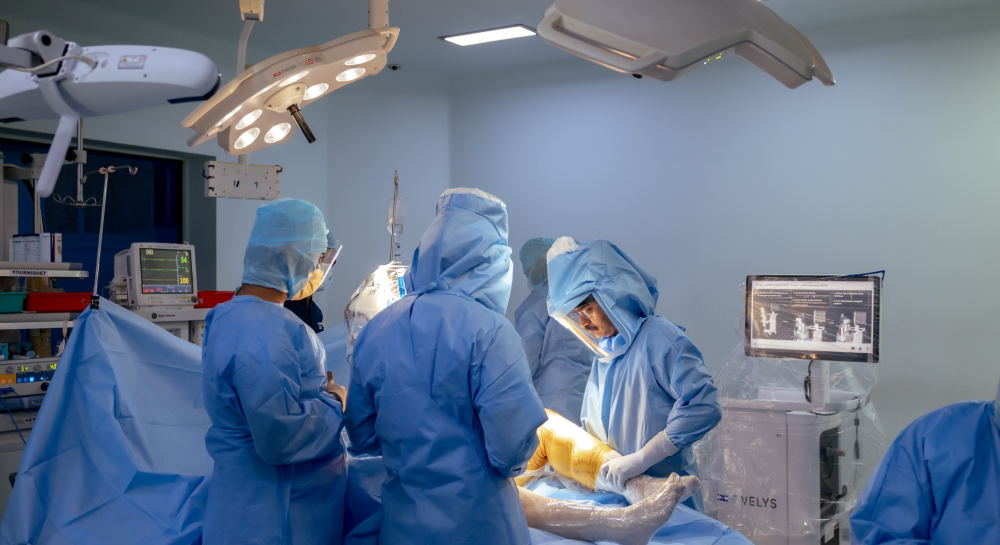

If you are considering knee replacement surgery, one of the first questions is, how long does knee replacement last? Modern knee implants are designed to provide reliable function for many years. In general, a knee replacement can last around 20 to 25 years, although the actual lifespan varies from person to person. Implant design, surgical technique, alignment, activity levels, body weight, bone health and overall joint condition can all influence long-term results. For patients considering surgery, understanding how long a knee replacement lasts can make the decision easier and help set realistic expectations for the years ahead.
How Long Does a Knee Replacement Last?
A modern knee replacement generally lasts 20 to 25 years, and many implants can continue functioning beyond this period. However, there is no fixed expiry date for a knee implant.
The lifespan depends on how the artificial joint performs over time. A well-positioned implant that remains stable and experiences normal levels of wear may function effectively for decades.
This is why the question of how long a knee replacement lasts cannot be answered with one exact number for every patient.
What Determines How Long a Knee Replacement Lasts?
Several factors can influence implant longevity:
- Surgical precision: Accurate positioning and alignment are important for distributing forces across the implant.
- Implant quality: Modern implant materials and designs are developed to withstand repeated joint movement.
- Patient activity: Normal daily activities are generally compatible with knee replacement, while high-impact activities may place additional stress on the implant.
- Body weight: Higher loads across the knee can increase mechanical stress over time.
- Bone quality: Healthy bone helps provide stable support around the implant.
- Overall health: Conditions affecting bone, muscles or joints can influence long-term function.
- Post-surgery care: Rehabilitation and maintaining appropriate strength can support the function of the replaced knee.
Does Robotic Knee Replacement Make the Implant Last Longer?
Robotic-assisted knee replacement focuses on greater precision in planning and implant positioning. The goal is to place the components according to the patient's individual anatomy and the surgical plan.
According to Dr. S. Arumugam, the implant usually lasts around 20 to 25 years. With robotic-assisted technology such as Robot-Tek, precise positioning is intended to reproduce the planned alignment more accurately.
This can be important because implant positioning affects how forces are distributed through the artificial knee. More accurate alignment and balancing may potentially help reduce uneven loading and wear.
However, it is important to understand that robotic technology does not guarantee a specific implant lifespan. The longevity of a knee replacement still depends on multiple patient and surgical factors.
What Happens When a Knee Replacement Wears Out?
Over many years, an artificial knee can experience gradual wear. In some patients, the implant may eventually become loose or the surrounding bone may change.
Possible signs that require an orthopedic evaluation include:
- Increasing knee pain after a period of good recovery
- Swelling around the replaced knee
- Reduced movement
- A feeling of instability
- Difficulty putting weight on the leg
- Changes in the way the knee functions
Not every problem means the implant has reached the end of its lifespan. Pain or swelling can have several causes, so an orthopedic assessment is important.
Can a Knee Replacement Be Replaced?
Yes. If a knee replacement develops significant loosening, wear, infection or another major complication, revision knee replacement surgery may be considered.
Revision surgery is different from the original knee replacement because the surgeon may need to remove existing components, address bone loss and use specialised implants. Therefore, preserving the function of the first knee replacement for as long as reasonably possible is an important goal.
How Can You Help Your Knee Replacement Last Longer?
Patients can take practical steps to support the long-term function of their implant:
- Maintain a healthy body weight.
- Follow the rehabilitation programme recommended after surgery.
- Keep the muscles around the knee strong.
- Stay physically active with suitable low-impact activities.
- Avoid unnecessary high-impact stress on the replaced knee.
- Attend follow-up appointments as advised.
- Seek medical evaluation if new or worsening symptoms develop.
These measures do not guarantee that an implant will last for a particular number of years, but they can contribute to better long-term joint management.
Frequently Asked Questions
How long does knee replacement last on average?
A knee replacement typically lasts around 20 to 25 years. Some implants may continue functioning longer depending on the patient's age, activity level, implant performance and other factors.
Can a knee replacement last 30 years?
Yes, it is possible for a knee replacement to function for 30 years or longer in some patients. However, surgeons cannot guarantee a specific lifespan for an individual implant.
Does robotic knee replacement last longer than conventional knee replacement?
Robotic-assisted surgery can help the surgeon achieve precise planning, alignment and implant positioning. This may support implant longevity, but it does not guarantee that a robotic knee replacement will last longer than a conventional replacement in every patient.
What can cause a knee replacement to fail?
Wear, loosening, infection, instability, fractures around the implant and other complications can affect a knee replacement. Regular assessment can help identify problems when they occur.
Is revision surgery needed after 20 years?
Not necessarily. If the implant continues to function well without significant symptoms or complications, revision surgery may not be required simply because 20 years have passed.
Conclusion
So, how long does a knee replacement last? For many patients, a modern knee replacement can provide approximately 20 to 25 years of service, with some lasting considerably longer. Precise surgical technique, appropriate implant positioning, patient factors and long-term care all have a role in determining durability.
Robotic-assisted techniques such as Robot-Tek aim to improve the precision of implant placement according to the patient's anatomy and surgical plan, which may support better load distribution and long-term implant performance.
The Chennai Ortho team, led by Dr. S. Arumugam, focuses on careful evaluation, surgical precision and personalised orthopedic care to help patients make informed decisions about knee replacement and their long-term joint health.


_+Procedure%2C+Benefits+and+Recovery.webp)