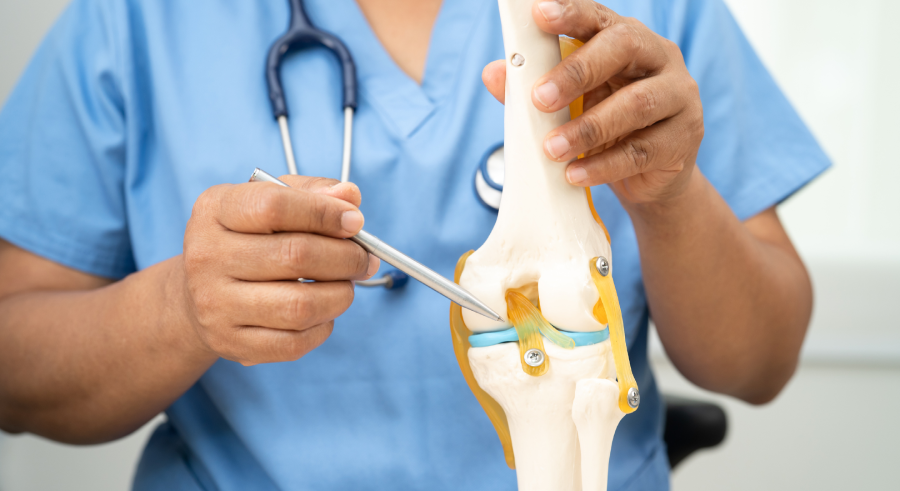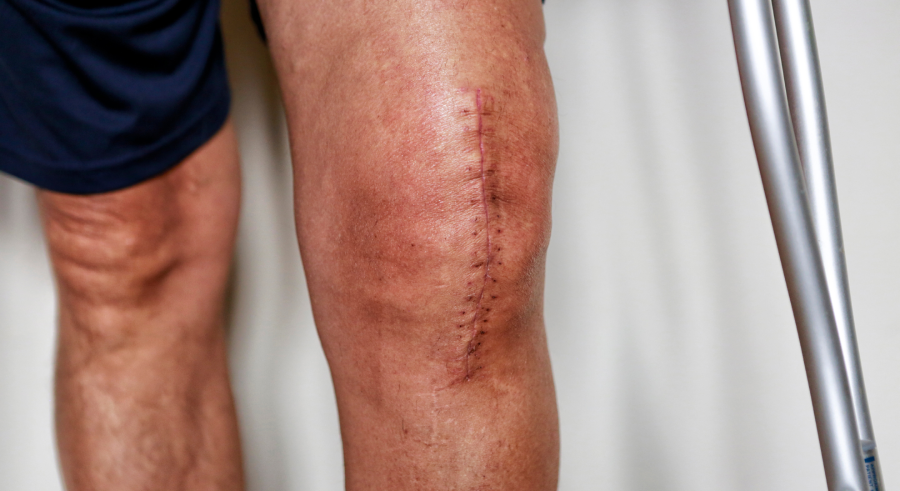

Knee replacement surgery has advanced significantly with the introduction of robotic-assisted technology. Today, robotic assistance in knee replacement helps orthopedic surgeons perform the procedure with greater precision while keeping every surgical decision under the surgeon's control. Many patients believe that a robot performs the surgery, but this is a common misconception. The surgeon performs every step, while robotic assistance in knee replacement provides real-time guidance, detailed measurements, and greater accuracy throughout the procedure. This combination of surgical expertise and advanced technology helps create a personalised treatment plan based on each patient's anatomy.
What Is Robotic Assistance in Knee Replacement?
Robotic assistance in knee replacement is an advanced surgical technology that supports orthopedic surgeons during total or partial knee replacement surgery. It does not replace the surgeon or operate independently. Instead, robotic assistance in knee replacement provides detailed information about the patient's knee, helping the surgeon plan the procedure and accurately position the implant.
The system helps the surgeon:
- Create a personalised surgical plan
- Assess bone anatomy and joint alignment
- Guide precise bone preparation
- Monitor implant positioning
- Evaluate soft tissue balance throughout surgery
Every surgical decision remains under the complete control of the orthopedic surgeon.
How Robotic Technology Helps Surgeons
One of the biggest advantages of robotic assistance in knee replacement is its ability to provide real-time information throughout surgery. The system continuously tracks the position of the knee and surgical instruments, allowing the surgeon to make precise adjustments whenever required.
The technology supports the surgeon by:
- Planning implant placement accurately
- Guiding bone cuts with precision
- Maintaining proper alignment
- Preserving healthy bone whenever possible
- Improving consistency during the procedure
Because robotic assistance in knee replacement is based on patient-specific anatomy, every surgical plan is customised rather than relying on a standard approach.
Conventional vs. Robotic Knee Replacement
Every person's leg alignment is different. A perfectly straight leg is uncommon, and many individuals naturally have a slight inward or outward alignment. Conventional knee replacement relies primarily on manual instruments and the surgeon's experience to achieve implant positioning.
With robotic assistance in knee replacement, the surgeon can accurately assess the patient's natural anatomy before preparing the bone. The robotic system provides detailed measurements that help position the implant according to the patient's individual alignment instead of using a one-size-fits-all approach.
This personalised planning may support:
- Better implant positioning
- Improved joint alignment
- Balanced knee movement
- More natural joint mechanics
- Improved comfort after surgery
Better Precision During Bone Preparation
Preparing the bone correctly is one of the most important stages of knee replacement surgery. Even small differences in bone preparation can affect implant positioning.
Robotic assistance in knee replacement allows surgeons to perform planned bone cuts with greater precision while preserving healthy bone whenever possible. The robotic system continuously provides guidance throughout the procedure, helping the surgeon remain within the planned surgical boundaries.
This level of accuracy supports proper implant positioning and balanced joint mechanics.
Soft Tissue Balancing
A successful knee replacement depends on more than replacing damaged bone and cartilage. The surrounding ligaments also need to function in balance.
Using robotic assistance in knee replacement, surgeons can assess ligament tension during different stages of knee movement. This real-time feedback helps optimise joint balance before the implant is permanently positioned.
Balanced soft tissues may contribute to:
- Better knee stability
- Improved movement
- More even force distribution
- Smoother joint function
How Safe Is Robotic Knee Replacement?
Many patients ask whether robotic-assisted surgery is safe. The answer is that robotic assistance in knee replacement is designed to improve surgical precision rather than replace the surgeon.
The robotic system helps the surgeon plan the angle and depth of bone cuts with high accuracy. Throughout the procedure, the surgeon remains in complete control while the technology provides continuous guidance.
Following recovery and rehabilitation, many patients are able to return to activities such as sitting cross-legged, depending on their flexibility, muscle strength, overall health, and individual condition. Recovery outcomes vary from patient to patient.
Who May Benefit?
Robotic assistance in knee replacement may be suitable for patients with:
- Advanced knee arthritis
- Severe cartilage damage
- Knee deformity
- Chronic knee pain
- Reduced knee function despite conservative treatment
The decision depends on clinical examination, imaging findings, and the surgeon's assessment.
Frequently Asked Questions
Does the robot perform the surgery?
No. The orthopedic surgeon performs the entire operation. Robotic assistance in knee replacement serves as a guidance system that improves precision.
Is robotic-assisted surgery more accurate?
The technology provides real-time measurements that help surgeons achieve accurate implant positioning and joint alignment.
Is robotic knee replacement suitable for everyone?
Not every patient requires robotic-assisted surgery. Suitability depends on the condition of the knee, bone quality, overall health, and the surgeon's evaluation.
Does robotic technology guarantee better results?
No surgical procedure can guarantee specific outcomes. However, robotic assistance in knee replacement helps surgeons perform the procedure with greater precision and consistency.
Conclusion
Modern orthopedic surgery combines surgical expertise with advanced technology to deliver more personalised treatment. Robotic assistance in knee replacement helps surgeons plan procedures more accurately, improve implant positioning, balance the joint, and restore knee alignment based on each patient's unique anatomy. While the technology enhances precision, the experience and clinical judgment of the orthopedic surgeon remain the most important factors in achieving successful outcomes.
For patients considering robotic-assisted knee replacement, consulting an experienced orthopedic specialist is essential. Dr Arumugam and Chennai Ortho team provide comprehensive evaluation, personalised treatment planning, and advanced robotic-assisted surgical care to help patients regain knee function and return to their daily activities with confidence.