When patients think about Knee Replacement surgery, one of the first concerns is recovery time. How long before walking feels natural? When can normal routines resume? These are practical and important questions.
Recovery after robotic-assisted knee replacement is typically gradual and structured. It does not happen overnight, but it also does not feel overwhelming when guided properly. With modern surgical planning and supervised rehabilitation, most patients experience steady progress rather than sudden ups and downs.
Understanding the general stages of healing helps set realistic expectations without creating unnecessary worry.
Immediately After Surgery: Safe and Guided Movement
Recovery begins the same day as surgery. Patients are usually encouraged to sit up and stand with assistance within 24 hours. This early movement supports circulation and helps reduce stiffness.
During this stage:
- Pain control is actively managed
- A physiotherapist guides basic exercises
- Walking begins with support
- The focus remains on safety and comfort
The goal is not speed. It is controlled progress. Most patients stay in the hospital only a few days before returning home with clear rehabilitation instructions.
The First Two Weeks: Establishing a Routine
The initial weeks are about building a rhythm. Swelling, tightness, and mild discomfort are common, but these gradually settle as the body adapts.
Patients generally work on:
- Improving knee bending
- Straightening the leg fully
- Walking short distances indoors
- Performing simple strengthening exercises
Recovery after robotic knee replacement can be a smooth and encouraging journey when guided by consistency. Regular, short exercise sessions often deliver better results than overexertion, helping the body regain strength steadily. By the end of the second week, many patients notice improved stability and growing confidence in their movement — a clear sign that progress is well underway.
Weeks Three to Six: Growing Independence
By the third week, noticeable changes often appear. Walking becomes smoother. Balance improves. Confidence increases.
At this point, many individuals:
- Reduce dependence on walkers or crutches
- Move comfortably around the house
- Resume light daily tasks
- Begin structured outpatient physiotherapy
Driving may be possible toward the end of this phase, depending on medical clearance. Office-based work is often resumed within a month, although this varies.
Robotic knee replacement recovery time during this stage reflects strengthening rather than healing alone. Muscles around the knee begin supporting the joint more effectively.
Six Weeks to Three Months: Functional Progress
This phase marks steady functional improvement. The knee begins to feel more natural during walking and daily movement.
Common experiences include:
- Less stiffness in the morning
- Increased walking distance
- Better control while climbing stairs
- Improved overall endurance
Low-impact activities such as cycling or swimming may be introduced under guidance. Most patients report that discomfort reduces significantly compared to their pre-surgery pain. Recovery is rarely dramatic. Instead, it feels like a gradual return of ease in movement.
Three to Six Months: Strength Consolidation
By three months, many individuals feel largely comfortable in daily life. However, healing continues beneath the surface.
During this period:
- Muscle strength becomes more balanced
- Swelling is minimal
- Joint movement feels smoother
- Walking long distances becomes manageable
It is common to notice subtle improvements even several months after surgery. This is part of normal adaptation to the new implant. Robotic knee replacement recovery time does not end at a specific date. It gradually transitions from rehabilitation to maintenance.
Six Months to One Year: Long-Term Adjustment
While daily activities may feel normal much earlier, full internal recovery can continue for up to a year. Scar tissue softens, muscles strengthen further, and movement becomes more natural over time.
At this stage, most patients:
- Engage comfortably in low-impact exercise
- Travel without difficulty
- Participate in social and routine activities
- Experience consistent knee stability
The joint should feel supportive rather than restrictive.
What Influences Recovery Time?
Every recovery journey is individual. Several factors contribute to how robotic knee replacement recovery time unfolds:
- Overall physical health
- Body weight
- Pre-surgery muscle condition
- Dedication to physiotherapy
- Following medical advice
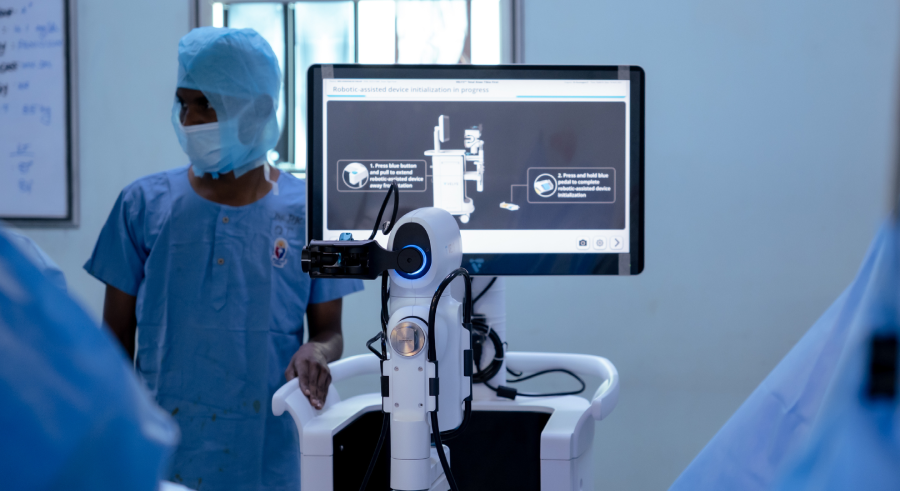
Robotic assistance improves surgical accuracy, particularly implant positioning and alignment. However, rehabilitation and patient participation remain central to long-term outcomes.
Practical Guidance for a Steady Recovery
Recovery works best when balanced. Patients are usually advised to:
- Follow prescribed exercise plans daily
- Avoid sitting for long periods
- Use ice to manage swelling
- Maintain a balanced diet
- Rest when the body signals fatigue
- Attend scheduled follow-ups
Doing too much too soon can delay progress. Doing too little can increase stiffness. A moderate and consistent approach tends to work best.
Frequently Asked Questions
How long does robotic knee replacement recovery time usually take?
Most patients return to regular daily routines within 6–8 weeks. Strength and flexibility continue improving for several months afterward.
Is robotic recovery significantly faster?
The precision of robotic-assisted surgery may support smoother early mobility, but overall recovery still depends on rehabilitation and individual healing capacity.
When can I walk normally?
Walking with assistance usually begins within a day. Independent walking improves steadily over the first few weeks.
When can I resume work?
Desk jobs are often resumed within four to six weeks. Physically demanding roles may require more time.
Will the knee feel natural again?
Most patients report that the joint feels stable and comfortable once recovery progresses. Adaptation continues over several months.
A Balanced View of Healing
Recovery after knee replacement is neither instant nor overwhelming. It is structured and progressive. Robotic knee replacement recovery time reflects gradual improvement supported by guided physiotherapy and careful surgical planning.
Patients who approach recovery with patience and consistency typically notice steady gains. Small improvements in walking, bending, and daily function build over time.
Conclusion
Recovery Timeline After Robotic Knee Replacement Surgery: What to Expect at Every Stage is best understood as a gradual return to mobility rather than a strict deadline. While the timeline varies from person to person, most individuals experience steady improvement within weeks and continued strengthening over several months.
For those considering advanced knee care with structured rehabilitation and precise surgical planning, Dr. S. Arumugam’s Chennai Ortho and team provides comprehensive orthopedic support focused on balanced recovery and long-term joint function.