.webp)
The conversation around knee replacement is changing. A decade ago, most patients wanted to know one thing: Will surgery reduce pain? Today, questions are far more detailed. Patients ask about implant positioning, surgical accuracy, long-term joint function, and how technology may influence recovery confidence.
This shift explains why interest in Robotic Knee Replacement Over Traditional Knee Replacement is growing rapidly in Chennai. Modern orthopaedic care is moving toward personalization and precision, and patients increasingly want treatment plans designed around their own anatomy rather than a one-size-fits-all approach.
The discussion about Robotic Knee Replacement Over Traditional Knee Replacement is not simply about newer technology replacing older methods. It reflects a larger transformation in how knee replacement surgery is planned, performed, and evaluated.
Knee Replacement Has Evolved Beyond Conventional Surgical Planning
Traditional knee replacement has successfully helped millions of patients worldwide for decades. However, advancements in imaging, data analysis, and robotic assistance have introduced new possibilities.
One of the biggest reasons patients compare Robotic Knee Replacement Over Traditional Knee Replacement is the evolution of pre-surgical planning.
Earlier approaches relied heavily on:
- Standard measurements
- Manual alignment techniques
- Intraoperative judgement
- Conventional imaging
Advanced robotic systems now support surgeons with:
- Detailed 3D knee mapping
- Patient-specific anatomical planning
- Real-time surgical feedback
- Precise implant positioning assistance
- Data-guided alignment evaluation
The goal is not replacing surgical expertise. The goal is improving planning accuracy.
Why Precision Has Become a Major Discussion in Robotic Knee Replacement Over Traditional Knee Replacement
Modern patients increasingly understand that knee replacement outcomes depend on more than implant selection.
Small alignment differences may influence:
- Joint balance
- Implant wear patterns over time
- Movement efficiency
- Overall knee mechanics
- Long-term implant performance
This growing awareness explains why Robotic Knee Replacement Over Traditional Knee Replacement has become an important topic among patients researching advanced orthopaedic options.
Precision is no longer viewed as an added advantage. Many patients now see it as an expectation.
The Shift From Standard Procedures to Personalized Surgery
Healthcare across multiple specialties is moving toward personalization.
Orthopaedics is no different.
A major reason for increased interest in Robotic Knee Replacement Over Traditional Knee Replacement is the ability to create individualized surgical plans.
Advanced planning may consider:
- Bone structure variations
- Existing deformities
- Joint alignment differences
- Ligament balance
- Implant positioning strategy
This represents an important shift in modern treatment from performing surgery on a condition to planning surgery around an individual patient.
How Technology Is Changing Expectations Around Recovery
Recovery expectations have evolved alongside surgical advancements.
Patients no longer focus only on whether surgery succeeds. They increasingly ask:
- How confidently can movement return?
- How predictable is recovery planning?
- Can treatment support long-term joint function?
- How individualized is rehabilitation?
The growing interest in Robotic Knee Replacement Over Traditional Knee Replacement reflects these changing expectations.
Patients want outcomes supported by planning, precision, and advanced surgical systems.
Why Younger Patients Are Asking More Questions About Robotic Knee Replacement Over Traditional Knee Replacement
Knee replacement discussions are no longer limited to older age groups.
Many younger arthritis patients and active professionals now research treatment earlier because they are thinking about:
- Long-term implant performance
- Future mobility expectations
- Activity levels after treatment
- Durability considerations
This shift is contributing to greater awareness around Robotic Knee Replacement Over Traditional Knee Replacement and advanced joint preservation strategies.
The Human Expertise Behind Robotic-Assisted Surgery
One common misconception is that robotic systems perform surgery independently.
This is incorrect.
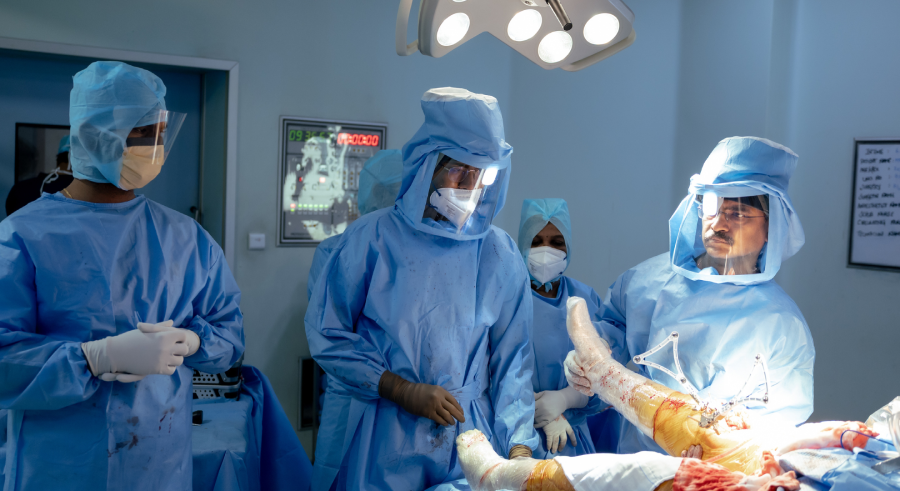
When discussing Robotic Knee Replacement Over Traditional Knee Replacement, it is important to understand that experienced orthopaedic surgeons remain fully responsible for:
- Surgical decision-making
- Implant selection
- Procedure execution
- Intraoperative adjustments
- Overall patient outcomes
Technology supports expertise. It does not replace it.
Experienced surgeons remain the most important factor in successful knee replacement outcomes.
Why Chennai Is Becoming a Preferred Destination for Advanced Knee Care
Chennai has gained recognition for specialised orthopaedic treatment due to:
- Adoption of advanced robotic technologies
- Experienced joint replacement specialists
- Comprehensive rehabilitation programs
- Access to complex knee replacement care
- Increasing focus on precision-based orthopaedics
As awareness grows, more patients are actively exploring Robotic Knee Replacement Over Traditional Knee Replacement options in Chennai before making treatment decisions.
Common Questions Patients Ask
Is Robotic Knee Replacement Over Traditional Knee Replacement always better?
Not every patient requires robotic-assisted surgery. Suitability depends on anatomy, arthritis severity, and specialist evaluation.
Why are patients increasingly choosing Robotic Knee Replacement Over Traditional Knee Replacement?
Patients often value precision planning, personalized treatment approaches, and confidence in implant positioning.
Does robotic technology replace surgeon experience?
No. Technology assists planning and execution, but surgeon expertise remains essential.
Can advanced arthritis patients benefit from robotic-assisted procedures?
Many patients may be suitable candidates after assessment by an experienced orthopaedic specialist.
Looking Ahead: The Future of Knee Replacement Is Becoming More Personalized
The growing preference for Robotic Knee Replacement Over Traditional Knee Replacement reflects a broader transformation in medicine. Orthopaedic care is gradually moving toward greater personalization, advanced planning, and precision-guided treatment.
For patients, the discussion is increasingly shifting from whether surgery is needed to how accurately treatment can be designed for long-term function and confidence.
Conclusion
The rising interest in Robotic Knee Replacement Over Traditional Knee Replacement is driven by changing patient expectations and advancements in orthopaedic technology. Patients today seek more than symptom relief; they want individualized treatment planning, precision-supported procedures, and confidence in long-term mobility outcomes.
For those exploring advanced knee care in Chennai, the Chennai Ortho team is recognised for specialised orthopaedic expertise and patient-focused treatment. Dr Arumugam brings more than 27 years of experience, over 20,000 treated patients, 8,000+ joint replacements, and 1,000+ robotic knee surgeries. His extensive experience in robotic-assisted orthopaedics and contribution to international conferences continue to position Chennai among important centres for advanced joint replacement care.