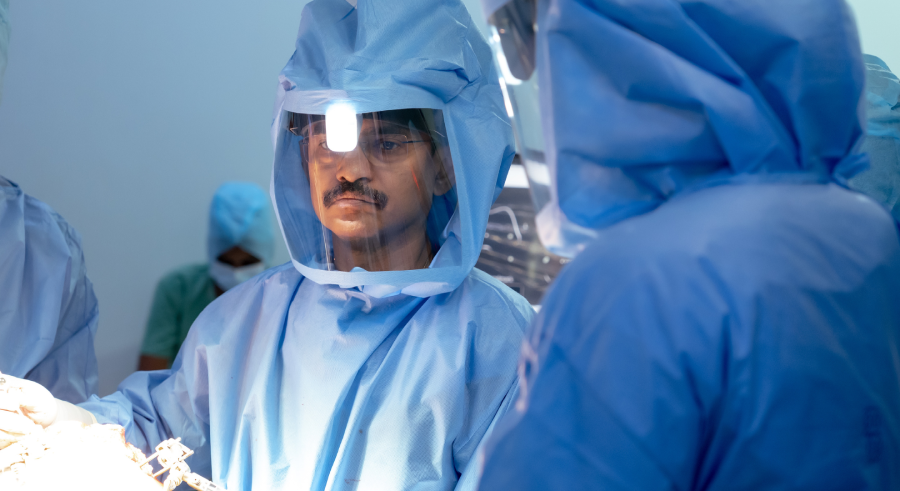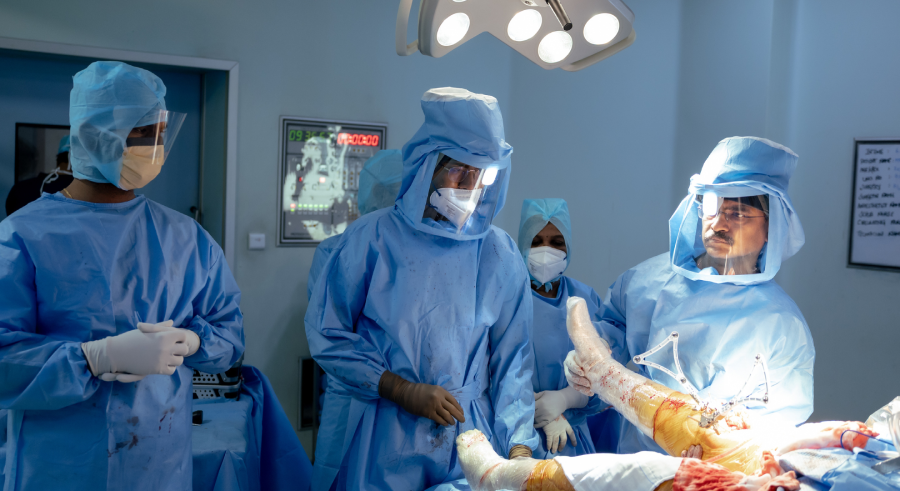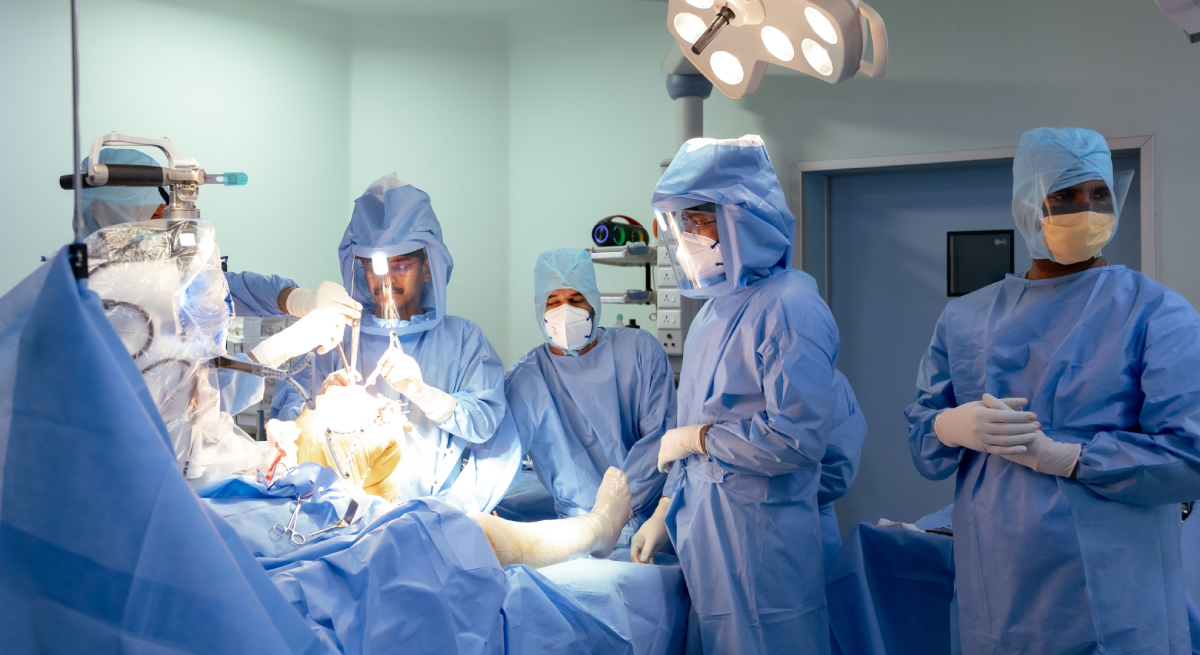
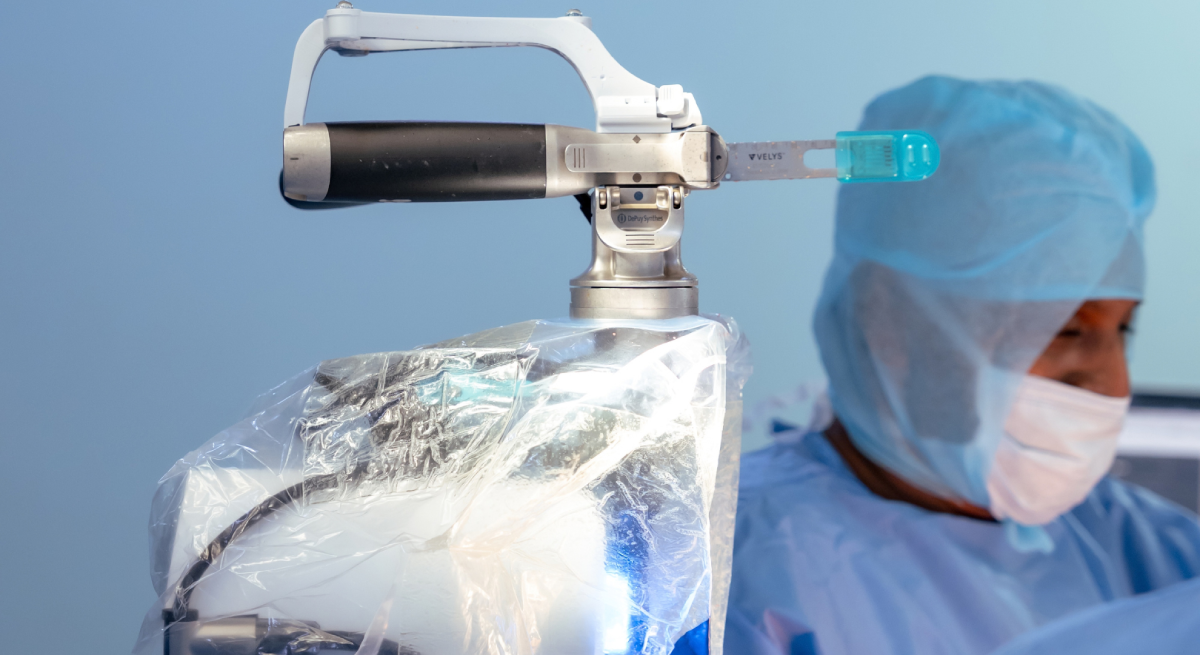
Yes, robotic technology can be used for partial knee replacement when arthritis or joint damage is limited to a suitable part of the knee. Robotic partial knee replacement allows the surgeon to plan the procedure around the individual patient’s knee anatomy and position the implant with a high degree of accuracy. Unlike total knee replacement, the entire joint is not resurfaced. Healthy areas of the knee, including unaffected bone and supporting structures, can be preserved. However, whether a partial replacement is appropriate depends mainly on the pattern and extent of knee damage.
What Is Robotic Partial Knee Replacement?
The knee has three main compartments: the medial compartment on the inner side, the lateral compartment on the outer side, and the patellofemoral compartment between the kneecap and thigh bone.
In some patients, arthritis is concentrated mainly in one compartment while other areas remain relatively healthy. Robotic partial knee replacement is designed for selected cases where only the damaged compartment needs to be resurfaced.
The robotic system assists the surgeon with planning, measurements and execution. It does not perform the operation independently. The surgeon remains responsible for every important surgical decision.
How Is It Different From Total Knee Replacement?
The main difference is the amount of the knee that is treated.
During total knee replacement, damaged surfaces across the knee joint are replaced. During partial replacement, treatment is limited to the affected compartment.
This means robotic partial knee replacement may preserve more of the patient’s natural:
- Bone
- Joint surfaces
- Ligaments
- Knee structure
- Unaffected cartilage
Preserving these structures can help maintain more of the knee’s existing mechanics. However, partial replacement should not be chosen simply because it involves less bone removal. The condition of the entire knee must first be assessed.
How Does Robotic Partial Knee Replacement Work?
Robotic assistance gives the surgeon detailed information about the knee before and during the procedure. Depending on the robotic platform, the system can help map the joint, assess alignment and guide preparation of the damaged area.
Planning the Implant Position
The surgeon evaluates the patient’s anatomy and determines where the implant should sit. This is important because even a small implant must work correctly with the remaining natural knee.
Assessing the Knee During Surgery
Information gathered during the procedure can help the surgeon understand alignment, movement and soft-tissue balance. The plan can then be adjusted when clinically necessary.
Preparing Only the Required Area
The damaged bone surfaces are prepared for the partial implant while healthy areas are preserved as far as appropriate. Robotic guidance can help the surgeon follow the planned boundaries accurately.
The aim is not to make every knee identical. The aim is to place the implant appropriately for that individual knee.
Who May Be Suitable for Robotic Partial Knee Replacement?
A patient may be considered when arthritis is mainly confined to one knee compartment and the remaining joint is sufficiently healthy.
The surgeon may evaluate:
- Location of cartilage loss
- Severity and distribution of arthritis
- Condition of the knee ligaments
- Knee stability
- Range of movement
- Alignment or deformity
- Symptoms and activity limitations
- Condition of the other knee compartments
Age alone does not determine suitability. Two people of a similar age can have very different patterns of arthritis.
When Might Partial Knee Replacement Not Be Appropriate?
Robotic partial knee replacement is not suitable for every painful or arthritic knee.
If significant arthritis involves multiple compartments, replacing only one part may leave an important source of symptoms untreated. Certain patterns of severe deformity, instability, ligament problems or inflammatory joint disease may also affect whether a partial procedure is appropriate.
This is why imaging and physical examination matter. The decision is based on the whole knee, not simply the area where the patient feels the most pain.
Why Can Robotics Be Useful in Partial Knee Surgery?
Partial knee replacement works within a relatively small area of the joint. Implant position and preservation of surrounding structures therefore require careful planning.
Robotic technology can assist with controlled bone preparation, implant positioning and assessment of the knee during surgery. It can also provide the surgeon with real-time information that may help refine the surgical plan.
However, robotic technology does not turn an unsuitable partial replacement into a suitable one. Patient selection and the surgeon’s judgement remain central to the procedure.
Frequently Asked Questions
Can a robot perform partial knee replacement on its own?
No. The surgeon performs and controls the operation. The robotic system provides planning, measurements and surgical guidance.
Is robotic partial knee replacement less extensive than total knee replacement?
It generally involves resurfacing a smaller portion of the knee because unaffected compartments are preserved. The appropriate procedure still depends on the extent of arthritis.
Can both the inner and outer side of the knee be treated with partial replacement?
Partial replacement can be considered for different compartments in selected patients. The exact procedure depends on where the arthritis is located and the condition of the remaining knee.
Does robotic surgery guarantee better results?
No surgical technology can guarantee an outcome. Robotics can assist with planning and surgical accuracy, while results also depend on patient selection, implant positioning, rehabilitation and other clinical factors.
Can arthritis develop elsewhere after partial knee replacement?
Yes. Because some natural joint surfaces remain, arthritis can later progress in another compartment in some patients.
How is suitability confirmed?
The orthopaedic surgeon usually combines the patient’s symptoms, physical examination and imaging findings to determine whether the damage is sufficiently localised for partial replacement.
Conclusion
Robotic partial knee replacement can be an option when knee arthritis is restricted to an appropriate compartment and the remaining parts of the joint are healthy enough to preserve. Its key advantage is not simply that robotics is being used, but that the surgeon can combine detailed planning with a bone-preserving procedure tailored to the affected part of the knee.
The Chennai Ortho team evaluates the complete knee before recommending partial or total knee replacement. The final choice depends on the distribution of arthritis, ligament function, alignment, symptoms and individual knee anatomy rather than on technology alone.