Knee replacement surgery has become a highly successful procedure for people living with severe arthritis, deformities, or long-standing knee damage. However, not every knee replacement is straightforward. Some patients have severe bone loss, major deformities, previous surgeries, or implants that require a different level of planning and surgical expertise. This is where complex knee replacement surgery becomes important.
Unlike routine procedures, complex knee replacement surgery demands advanced surgical techniques, careful planning, and technologies that help improve implant positioning and joint balance. Every complex knee presents unique challenges, making the surgeon's experience and surgical planning essential for achieving accurate implant positioning and restoring knee function.
What Is Complex Knee Replacement Surgery?
Complex knee replacement surgery is performed when the knee joint has challenges beyond typical arthritis. These situations often require specialized implants, advanced surgical planning, or robotic assistance to restore joint alignment and function.
A complex procedure does not necessarily mean the surgery is unsafe. It simply means that the surgeon must address additional challenges while ensuring the implant is accurately positioned.
Some situations that may require complex knee replacement surgery include:
- Severe knee deformity (bow legs or knock knees)
- Advanced arthritis with significant bone loss
- Failed previous knee replacement (revision surgery)
- Old fractures involving the knee joint
- Multiple previous knee surgeries
- Stiff knees with limited movement
- Ligament instability
- Severe rheumatoid arthritis
Every patient presents different challenges, making careful evaluation essential before surgery.
Why Advanced Planning Matters in Complex Knee Replacement Surgery
In complex knee replacement surgery, careful planning is essential because every knee has unique challenges. Surgeons evaluate bone quality, ligament stability, deformity, and implant selection before surgery. This preparation helps improve implant positioning, reduce unexpected challenges during the procedure, and create a treatment plan suited to the patient's anatomy.
Robotic Technology in Complex Knee Replacement Surgery
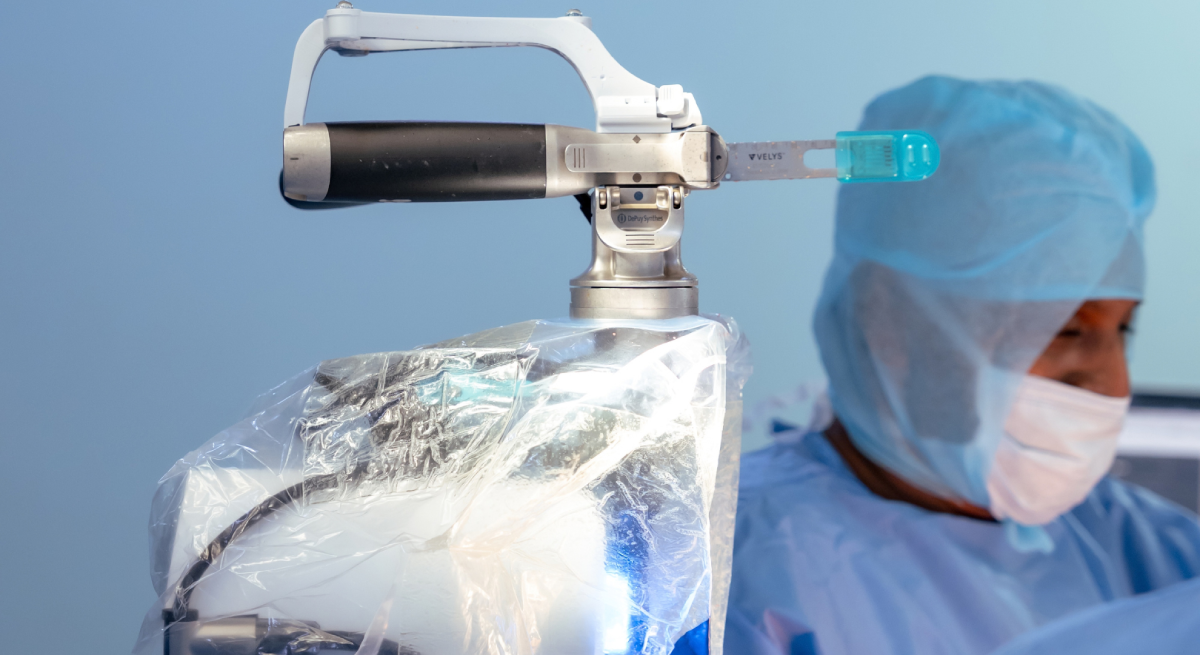
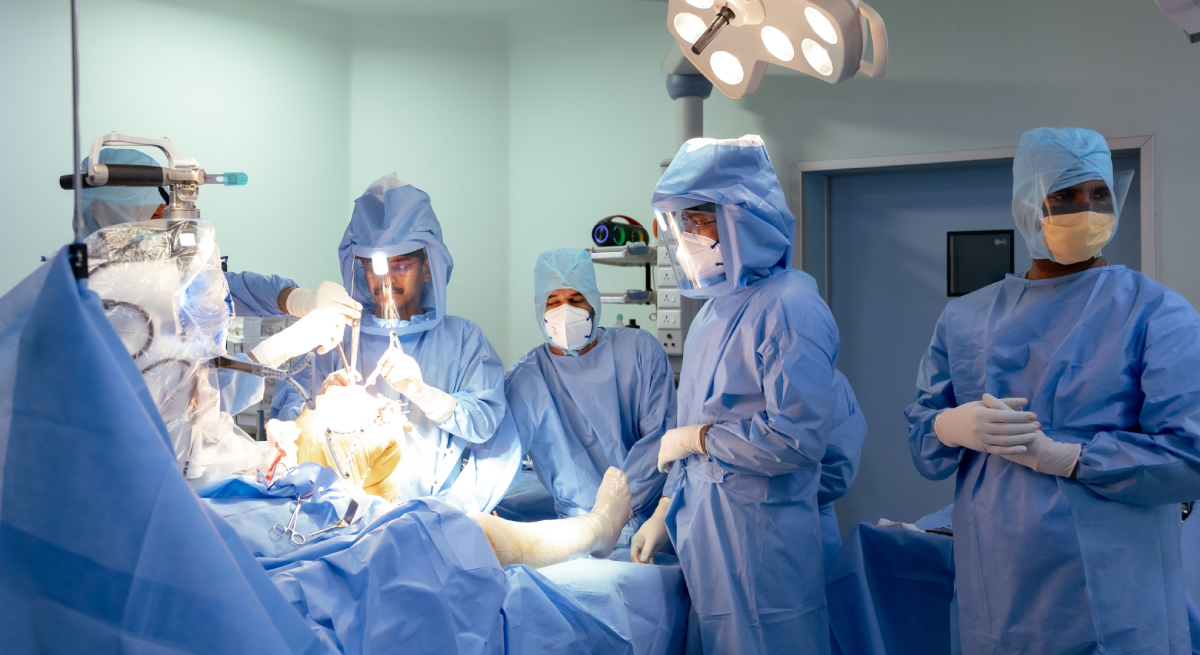
The Chennai Ortho Team uses the VELYS™ Robotic-Assisted Solution, which provides real-time data during surgery. Unlike some robotic platforms, VELYS does not require a pre-operative CT scan, reducing unnecessary radiation exposure while still allowing precise intra-operative planning.
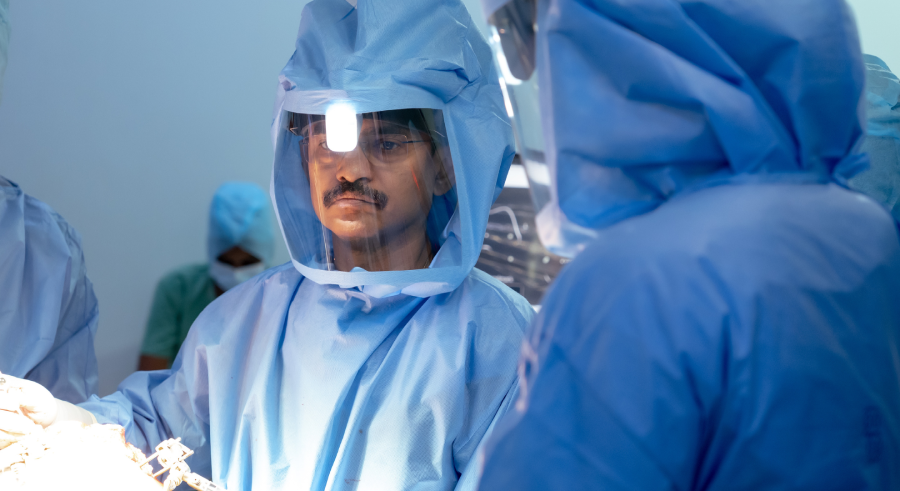
With more than 1,000 robotic knee replacement surgeries performed, Dr. S. Arumugam combines robotic precision with surgical expertise to help achieve accurate implant positioning, especially in complex knee replacement surgery.
During surgery, the robotic system helps the surgeon:
- Measure knee movement in real time
- Assess soft tissue balance
- Guide accurate bone preparation
- Improve implant positioning
- Make adjustments based on the patient's anatomy
The robot does not perform the surgery independently. Instead, it provides real-time guidance while the surgeon remains in complete control throughout the procedure.
Why Dr. Arumugam Performs Knee Replacement Without a Tourniquet
One aspect that distinguishes Dr. Arumugam's surgical approach is his preference not to routinely use a tourniquet during knee replacement surgery.
Traditionally, many knee replacement procedures use a tourniquet around the thigh to temporarily reduce blood flow. However, evolving surgical practices and clinical evidence have encouraged many experienced surgeons to adopt tourniquet-free techniques when appropriate.
Dr. Arumugam performs complex knee replacement surgery without routinely using a tourniquet because this approach may help:
- Preserve normal muscle function
- Reduce stress on surrounding soft tissues
- Maintain better blood circulation during surgery
- Assess real-time tissue balance more accurately
- Potentially reduce post-operative thigh discomfort
- Evaluate natural knee movement before completing the procedure
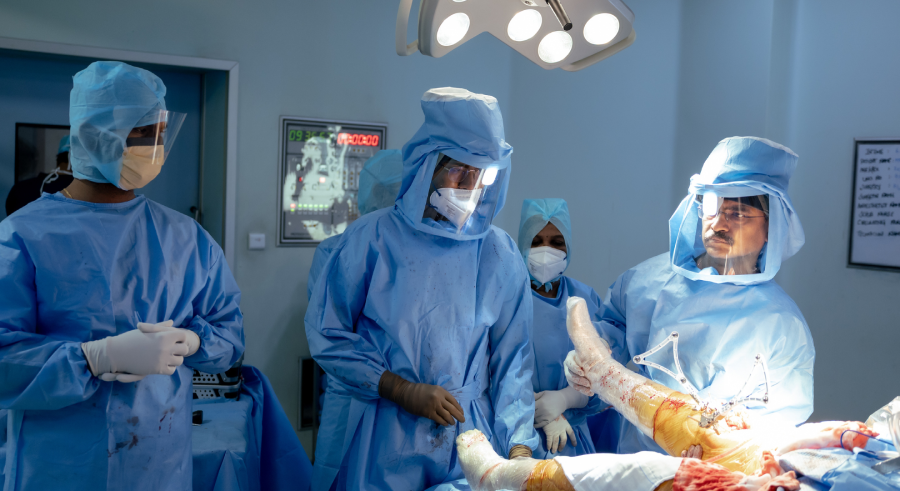
Combined with robotic assistance, this approach allows the surgical team to assess knee balance under more natural physiological conditions and make informed adjustments during surgery. The decision is always based on each patient's clinical condition.
Challenges in Complex Knee Replacement Surgery
Complex procedures often involve more than replacing a worn joint. Surgeons may need to address:
- Bone loss caused by severe arthritis or previous surgery
- Significant bow-leg or knock-knee deformities
- Scar tissue from earlier operations
- Ligament instability affecting knee balance
- Old fractures involving the knee joint
Each of these factors requires careful surgical planning and, in some cases, specialized implants or reconstruction techniques.
Recovery After Complex Knee Replacement Surgery
Recovery depends on the patient's condition before surgery rather than the complexity of the procedure alone. Most patients begin walking with assistance soon after surgery, followed by physiotherapy to improve strength and knee movement. Patients with severe deformities or revision surgeries may require a longer rehabilitation period, and regular follow-up is important to monitor recovery.
Choosing the Right Surgeon for Complex Knee Replacement Surgery
Managing a complex knee requires more than replacing damaged cartilage and bone. It involves restoring alignment, balancing the soft tissues, and making important decisions during surgery based on the patient's anatomy.
With over 27 years of orthopedic experience, Dr. S. Arumugam has treated a wide range of primary, complex, and revision knee conditions. His experience, combined with advanced robotic technology and patient-specific planning, helps deliver a personalized approach for every procedure.
Frequently Asked Questions
Is complex knee replacement surgery riskier than routine knee replacement?
Complex procedures involve additional surgical challenges, but experienced surgeons, detailed planning, and advanced technology help manage these cases effectively.
Can robotic surgery be used for complex knee replacement surgery?
Yes. Robotic-assisted systems such as VELYS™ provide real-time information that supports accurate implant positioning and soft tissue balancing, making them particularly useful in many complex cases.
Why doesn't Dr. Arumugam routinely use a tourniquet?
Dr. Arumugam performs knee replacement without routinely using a tourniquet when clinically appropriate. This approach helps preserve natural blood flow during surgery and allows better assessment of tissue balance before the procedure is completed.
Conclusion
Every complex knee replacement surgery requires a personalized approach. Successful outcomes depend on careful planning, surgical expertise, and the appropriate use of advanced technology to address each patient's unique knee condition.
At Chennai Ortho Team, patients benefit from robotic-assisted knee replacement using the VELYS™ Robotic-Assisted Solution, which supports precise implant positioning without requiring a pre-operative CT scan. Having performed more than 8,000 joint replacement surgeries and treated over 20,000 patients from India and abroad, Dr. S. Arumugam combines extensive surgical expertise with a tourniquet-free approach, when clinically appropriate, to deliver individualized care for even the most challenging knee replacement cases.