One of the first questions patients ask before knee replacement surgery is, “Is robotic knee replacement painful?” Fear of pain can make patients hesitate even when knee damage is affecting their daily activities. It is important to understand that robotic-assisted surgery does not mean the patient feels pain while the operation is taking place. Anaesthesia keeps the patient comfortable during the procedure, while the surgical team manages discomfort during recovery.
Robotic technology is mainly used to help the surgeon plan the procedure and achieve accurate implant positioning. The level of discomfort after surgery can vary depending on the patient's health, the condition of the knee, pain tolerance, and the body's healing response.
Is Robotic Knee Replacement Painful During the Procedure?
No. Pain is controlled during robotic knee replacement through anaesthesia administered by the medical team. Patients are monitored throughout the procedure to maintain their comfort and safety.
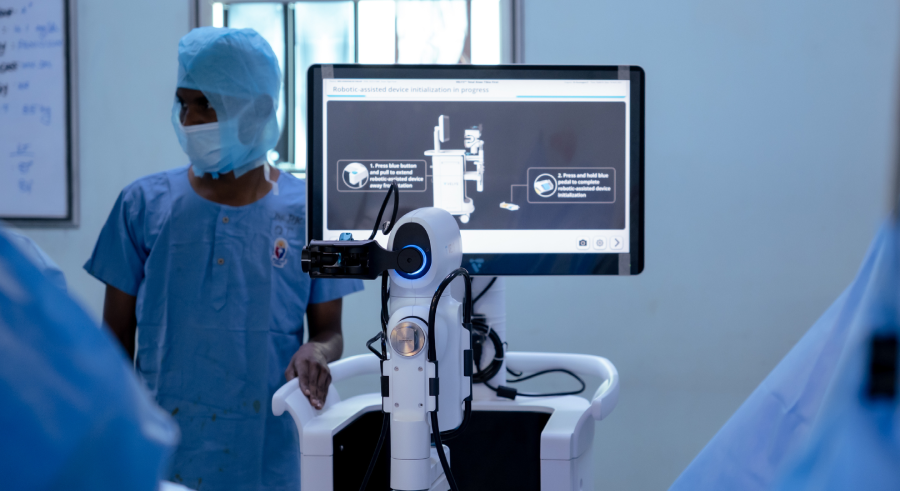
The robotic system itself does not perform the surgery independently. Instead, the surgeon uses computer-assisted planning and robotic guidance to carry out the procedure according to the patient's knee anatomy.
This distinction is important. Robotic assistance is intended to improve surgical planning and precision; it is not a replacement for anaesthesia or post-operative pain management.
What Does the Patient Feel After Robotic Knee Replacement?
The recovery period is when most patients notice discomfort. The knee may feel sore, swollen, stiff, or tight during the first phase of healing. These sensations are expected because the body is responding to surgery and beginning the repair process.
The amount of discomfort is not identical for everyone. Factors that can influence recovery include:
- The severity of arthritis before surgery
- Overall physical health
- Muscle strength around the knee
- Individual sensitivity to pain
- The type of anaesthesia and pain-control plan
- Response to physiotherapy
- Activity levels during recovery
Therefore, when someone asks if robotic knee replacement is painful, the answer should consider both the operation and the recovery period rather than treating them as the same experience.
Can Robotic Surgery Make Recovery More Comfortable?
Robotic assistance is not specifically designed to eliminate pain. Its primary purpose is to help the surgeon plan the operation based on the patient's individual anatomy and execute the planned bone preparation and implant positioning with computer-assisted guidance.
Accurate positioning is an important part of knee replacement surgery. The surgeon also considers ligament balance, alignment, bone condition, and the overall mechanics of the joint.
A carefully planned operation may help create a well-balanced knee, but it would be misleading to promise that robotic surgery automatically results in less pain for every patient. Recovery remains influenced by several surgical and patient-related factors.
How Is Pain Managed After Robotic Knee Replacement?
Pain management begins with planning. Before surgery, the orthopaedic and anaesthesia teams assess the patient's medical history and determine an appropriate approach for controlling discomfort.
After surgery, pain may be managed using a combination of measures rather than relying on a single treatment. Depending on the patient's condition, the treating team may recommend:
- Prescribed pain-relieving medication
- Cold therapy to help manage swelling
- Elevation when appropriate
- Guided physiotherapy
- Gradual increase in physical activity
- Adequate rest between rehabilitation sessions
Patients should follow the specific instructions provided by their surgical team rather than adjusting medication or exercises independently.
How Long Does Discomfort Continue?
There is no fixed recovery timeline that applies to every patient. Discomfort is often more noticeable during the early days following surgery and gradually changes as healing progresses.
Swelling and stiffness may remain for some time even when pain has started to decrease. Rehabilitation plays an important role during this period. Exercises are introduced progressively to help restore movement, muscle control, and strength.
A patient who experiences some discomfort during physiotherapy should not automatically assume that something is wrong. However, severe, rapidly increasing, or unusual pain should be discussed with the treating team.
Does Robotic Knee Replacement Hurt More Than Traditional Surgery?
It is not accurate to say that robotic knee replacement is always more or less painful than conventional knee replacement. Pain is affected by much more than the surgical technology used.
The surgeon's technique, the patient's condition, anaesthesia, pain-control methods, rehabilitation, and individual healing response can all influence the experience.
The main role of robotic assistance is to provide additional information and guidance during surgical planning and execution. Whether it is suitable depends on the patient's diagnosis, anatomy, and treatment requirements.
When Should Post-Surgery Pain Be Reported?
Some discomfort is expected, but patients should remain alert to symptoms that are outside their expected recovery pattern. Medical advice should be sought if pain becomes suddenly severe, continues to worsen, or is associated with symptoms such as fever, unusual wound drainage, significant redness, or increasing swelling.
Following scheduled reviews allows the surgeon to assess healing and address concerns at the appropriate stage.
Frequently Asked Questions
Is robotic knee replacement painful during surgery?
Patients generally do not feel surgical pain because anaesthesia is used during the procedure. The anaesthesia team monitors the patient throughout surgery.
Is robotic knee replacement painful after surgery?
Some discomfort, swelling, and stiffness are expected during recovery. Pain-management measures and rehabilitation are used according to the patient's individual needs.
Does robotic surgery guarantee less pain?
No. Robotic assistance is primarily intended to support surgical planning and precision. It does not guarantee a particular level of post-operative pain.
Can patients walk soon after robotic knee replacement?
The timing of movement and weight-bearing depends on the individual procedure and the surgeon's recommendations. Rehabilitation is generally introduced in a controlled manner following surgery.
What should patients do if pain suddenly increases?
Unexpected or rapidly increasing pain should be reported to the treating medical team, particularly when it occurs with fever, wound changes, or marked swelling.
Conclusion
So, is robotic knee replacement painful? Patients should expect some discomfort during the recovery phase, but they do not typically experience surgical pain while the operation is being performed because anaesthesia is used. Robotic assistance focuses on helping the surgeon plan and execute the procedure with greater precision.
Understanding the recovery process can replace much of the uncertainty surrounding surgery. The Chennai Ortho team helps patients understand the procedure, pain-management approach, rehabilitation requirements, and expected recovery before treatment. A consultation with an orthopaedic surgeon can provide guidance based on the patient's knee condition and overall health.